

The cost of building transit
It has to be lower…because we need to build more

Forward
When discussing transit, cost is an important topic but one that should be approached delicately in order to avoid coming across as against transit in general. I think the best framing for this is one presented by RMTransit: we must control transit construction costs because we need to build more transit. When costs are higher, we will build less transit for the money we have, and that’s a problem.
Region of Waterloo ION Phase 2
This issue is of particular concern right now, given that Phase 2 of ION, the Region of Waterloo’s rapid transit system, is now expected to cost triple its original estimate of 1.5 billion dollars. Bluntly, the region is now planning a 20 km LRT extension that will cost 4.5 billion dollars or a truly staggering $225 million/km. We also see this skyrocketing of costs in Montreal’s REM l‘Est project.
These prices are completely unreasonable, and these increases are not in line with any other cost increases. For the price of Phase 2 of ION,, we would already be paying top dollar for a fully grade-separated metro system but instead, we are getting a bare bones LRT system. Getting these prices under control is absolutely essential if we ever want to build out a robust transit system.
What is going on here?
I have some thoughts on why we are seeing such high prices for transit, but first, let’s look at some possible explanations shared by others.
Gold Plating
Some people suggest that our transit systems are “gold plated” or unnecessarily extravagant. In some cases this is true. For example, in nearby Toronto, many stations on the recently constructed Spadina subway extension consist of large cavernous stations with massive passenger capacity, despite being constructed in low density areas that are unlikely to generate the ridership the stations are designed to handle.
And this might be fine if we were planning on developing the area to increase its density. After all the world laughed at viral photos of the Chongqing, China metro station in the middle of a field. But the joke is now on us, as that metro station is in the middle of a bustling new development. However, in Toronto, this simply is not something the city is planning on doing. No other infrastructure is being built up, no zoning or development plans have been put forward.
One of the most egregious examples to me is the 407 station. It is surrounded by massive highways on two sides, a cemetery on another side, and a railway on the last side. This station will never be a dense urban development. Few people, if any, will ever walk to this station, yet it is a massive cavernous station, with greater capacity than even the busiest stations in downtown.
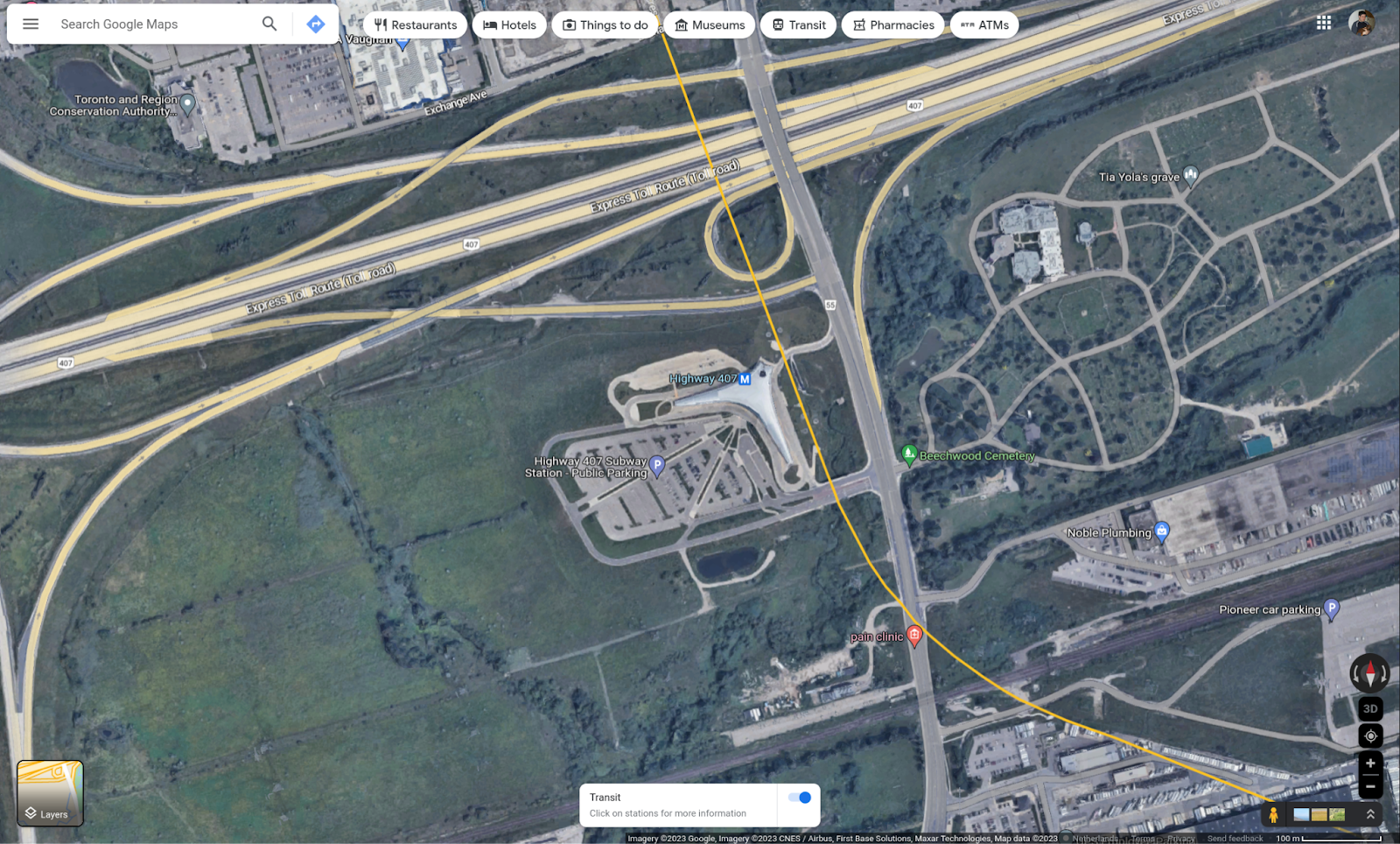
Obviously, this is intended to be a bus interchange, and this explains some of the capacity requirements. And building good bus interchange stations is a good thing. But this is not a quality bus interchange system. It has mediocre access to the highway–it is adjacent to the highway, but buses must exit the highway with traffic and follow a circuitous route to the station. There should be direct ramps from the station to the highway so that buses can enter and exit with minimal delay to their route. Instead of spending on that, we have a gold plated station which functions relatively poorly in its job as a transit station. Riders do care about aesthetics, but their fundamentals matter more. Riders would rather be on their bus than waiting under a fancy canopy.
Another example is the planned extension of the other side of Toronto’s U shaped subway line where the extension is proposed to go under some expensive single family homes. In this area, as a result of complaints from the homeowners, the subway tunnel will be dug excessively deep. This adds massive costs to the project and again compromises the experience for riders (it takes time to descend that far into the ground).
So yes, gold plating is a problem on our construction projects and absolutely drives significant waste in transit projects. But rarely are these decisions ever questioned. Contrary to (or maybe aligned with) popular opinion, cost isn’t a major obstacle–politicians are only too willing to spend money on expensive but frivolous features that don’t impact any current users or residents. But too unwilling to spend political capital on making good decisions that impact others. Or to put it another way, costs go up so that political capital costs stay low. Hence we get expensive, mediocre transit.
But is the Region of Waterloo ION Phase 2 project gold plated? A little. Original proposals for the project were estimated at $1.36 billion. Public consultations were completed and there was significant opposition to the project for all of the usual reasons. Planners responded by modifying the project to placate opposition (at least in as much as you can placate people who are fundamentally opposed to transit in their city). Those changes brought us to the original $1.52 billion estimate.
In context, this is already supposed to be a low cost transit option. LRT was chosen partly because it was lower cost and more affordable than a metro. On top of that, costs are further reduced by building very limited stations. Most stations do not even have a heated enclosure, a few have no enclosure at all. While I don’t agree with all the compromises–lack of pedestrian access, and lack of shelters is not ideal for a Canadian transit system–this is far from gold plated.
So yes, gold plating did increase the cost of the project, but in a relatively minor way–it is not even remotely responsible for the tripling of costs to 4.5 billion we are seeing today.
Staff Answers
In their report to council, staff gave several explanations for the tripling of costs. The first one is inflation, which explains some of the cost increases, but not all. The cost estimate given in 2021 is projected out to 2028 or 2030 when construction is supposed to begin. If we see >10% inflation year over year even just in the construction sector so that costs triple in a period of just 10 years, then transit is going to be the least of our problems. If we plan for typical inflationary increases, this only explains a small portion of the increase.
Regional staff also suggest that costs are driven by the route, involving crossing the Grand River as well as several elevated sections. And this is true, the route is more expensive than Phase 1. This is why the initial estimates were for 1.36 - 1.52 billion dollars, or approximately double the cost of Phase 1. I.e., these additional costs were already accounted for in the original estimate. So this does not explain the tripling of cost since then.
To me, staff’s explanations are weak at best as they do not explain the bulk of the increase in costs.
So what is really going on?!
I suspect that a significant part of the excessive costs we are seeing for this project (and many others–Region of Waterloo is also planning a 100 million dollar transit shelter for the new train station) are a result of several trends in engineering and management that I have observed.
Over-engineering
We see this directly with roads, where engineers require a minimum of 3.3, 3.5, even 4 meter wide lanes, even though data shows that wider lanes are less safe and more dangerous. They increase turn radii and flair intersections well beyond what is necessary (some receiving lanes in the Region of Waterloo are more than 6 meters wide for a single lane, on top of 12-30 meter wide turn radii).
So if engineers are doing this for roads, could they be doing it for other aspects of a project as well? I suspect the answer is yes. Consider for example, the catenary system used on the ION LRT. This is the system that powers the LRT trains and consists of an overhead wire (the catenary) and the poles from which the wire is suspended (catenary poles). The catenary system is critical to the system operating. A single failure will require suspension of service in the area, and can even strand trains.
So it makes sense to build it as robustly as possible right? Except if that robustness gets in the way of building more transit. If we spend so much ensuring the catenary system has huge margins of error, that we cannot build a transit system, then we have lost sight of the forest for the trees. Unfortunately engineers' only job is to look at the trees. There is no backstop, no constraint on the engineering design. Further, their jobs and reputation are on the line. If things go wrong, they’ll be to blame, but if things aren’t built because they are too expensive, well that’s on someone else’s shoulders.
So is the catenary overbuilt? I am not an engineer and I cannot say whether it is. What I do know is that catenary systems for similar trains in similar places have significantly smaller catenary poles and simpler overhead constructions. Even looking at the trams in Toronto (which are operating very similar trains and have been operating reliable high frequency services for literally a century) the overhead catenary system is much simpler. For a specific example, the brand new TTC streetcar guideway on Spadina which carries a very similar LRV in an at-grade, separated concrete guideway moving at traffic speeds, exactly the same as most of Kitchener’s system has much lower gauge poles, with only a single suspended wire per track. There could not be a closer analogue, and yet the TTC guideway is far less complex.
Now the catenary system (as far as I know) is not driving the cost for phase 2 either. I don’t know that the system has changed from phase 1, but I suspect engineering overbuilding is probably driving construction costs in general.
It is probably worth discussing resilience in a bit more detail, but I will save that for a future article. For the moment I will simply mention that Chuck Marohn of Strong Towns has some great points on resilience basically arguing that hardening infrastructure against an increasing world of threats is a game we will always lose, and that the most resilient infrastructure is often cheap and flexible, making it adaptable to change, and more easily and quickly repaired in the face of a changing world.
Of course, standards for some engineering designs should improve. We should build more robust infrastructure in the future. But we must also be pragmatic–if we can no longer build new transit because the cost is so astronomically excessive, then our standards are irrelevant.
A Concrete Example
For another concrete example, let’s compare three busways.
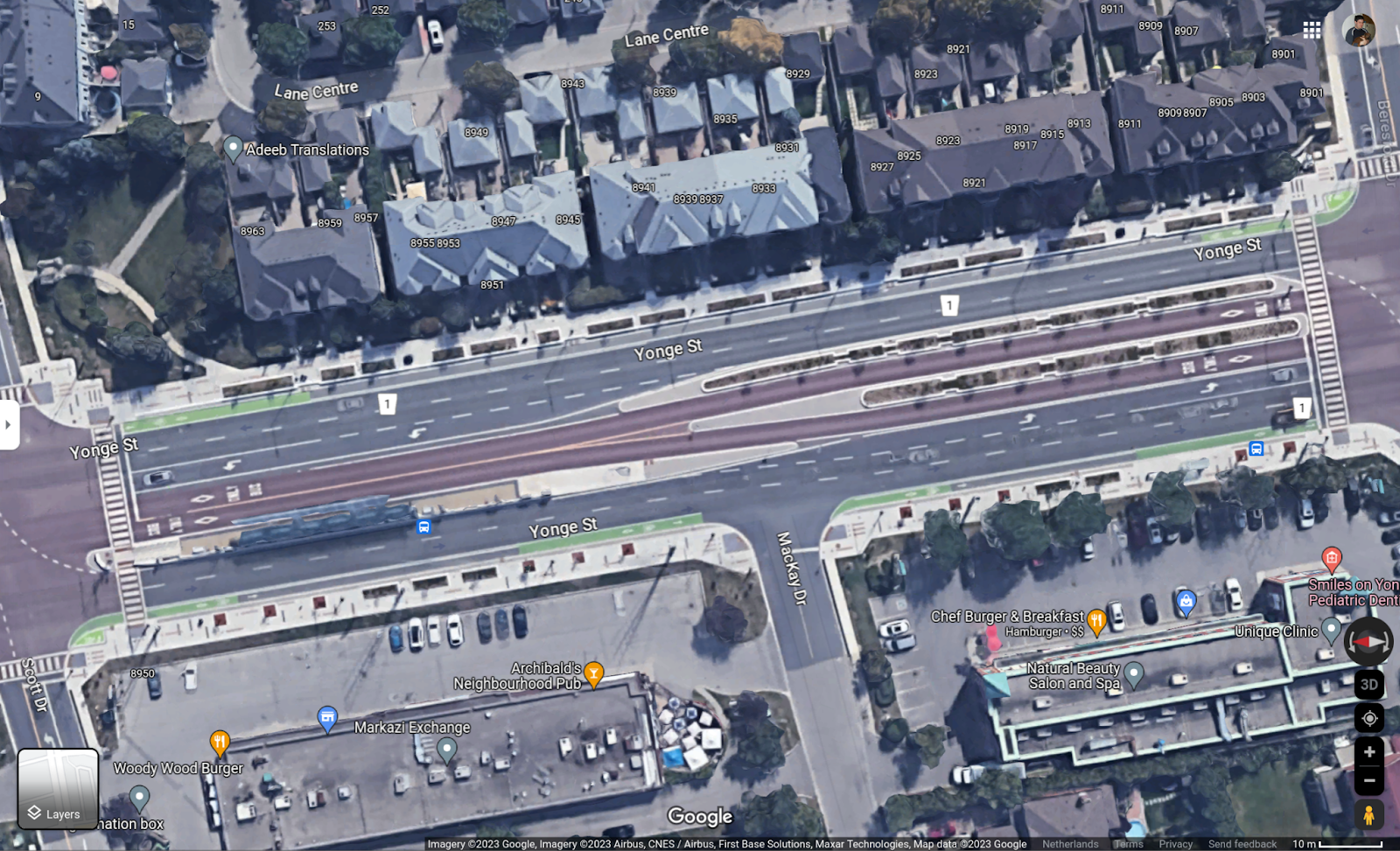
In Richmond Hill north of Toronto, the city has built a busway along a busy arterial road. It runs along the centre of the road, and is separated from traffic only by painted lines. Buses move at the speed of traffic. The busway is nine meters wide.
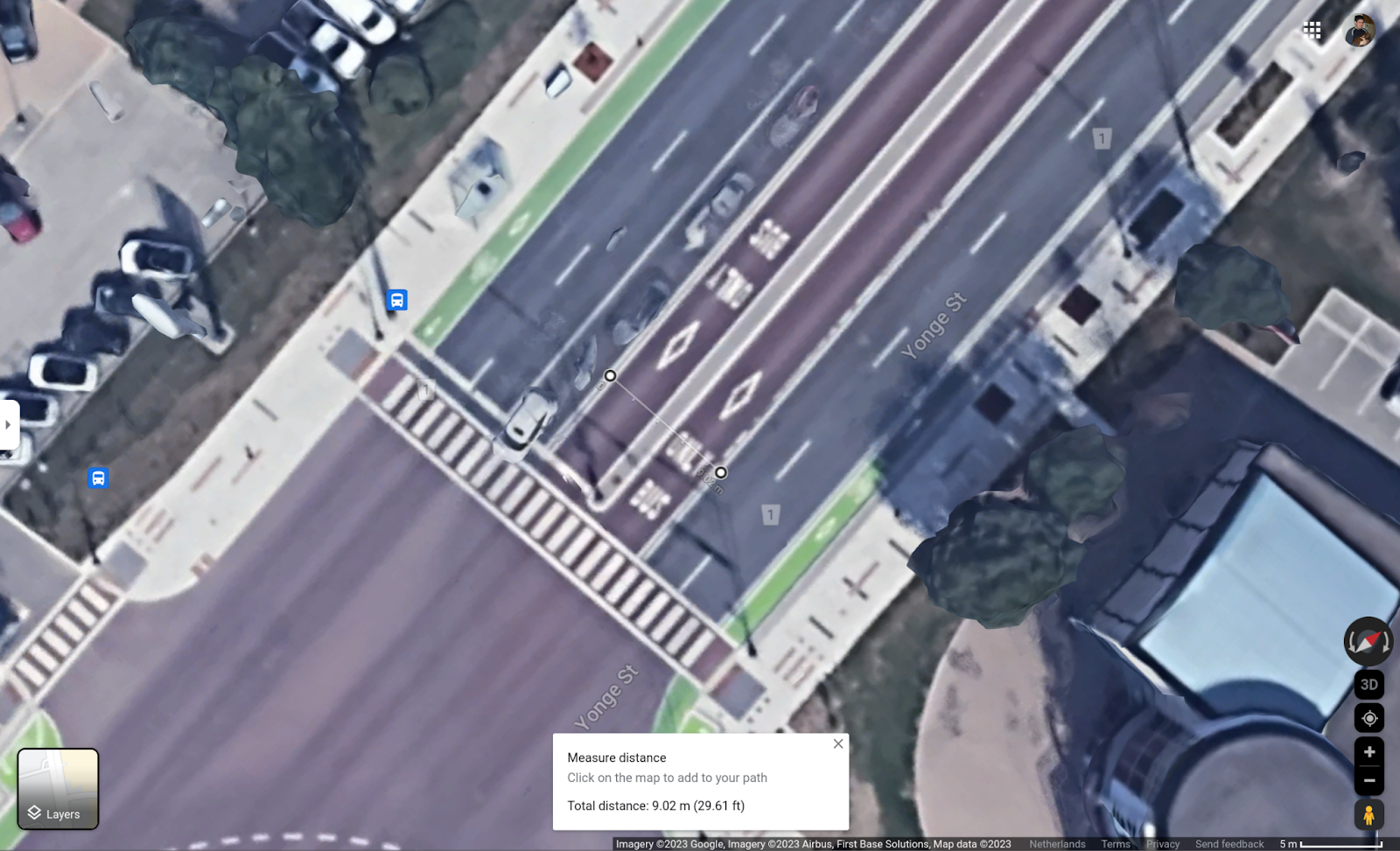
At some intersections this median is widened significantly to place landscaping between the lanes. This lengthens the crossing distance for pedestrians, but notably these medians do not function as a refuge for pedestrians who are crossing and do not limit the turning radius of drivers. Stations however, are relatively modest, featuring a single side platform on each side of the intersection.
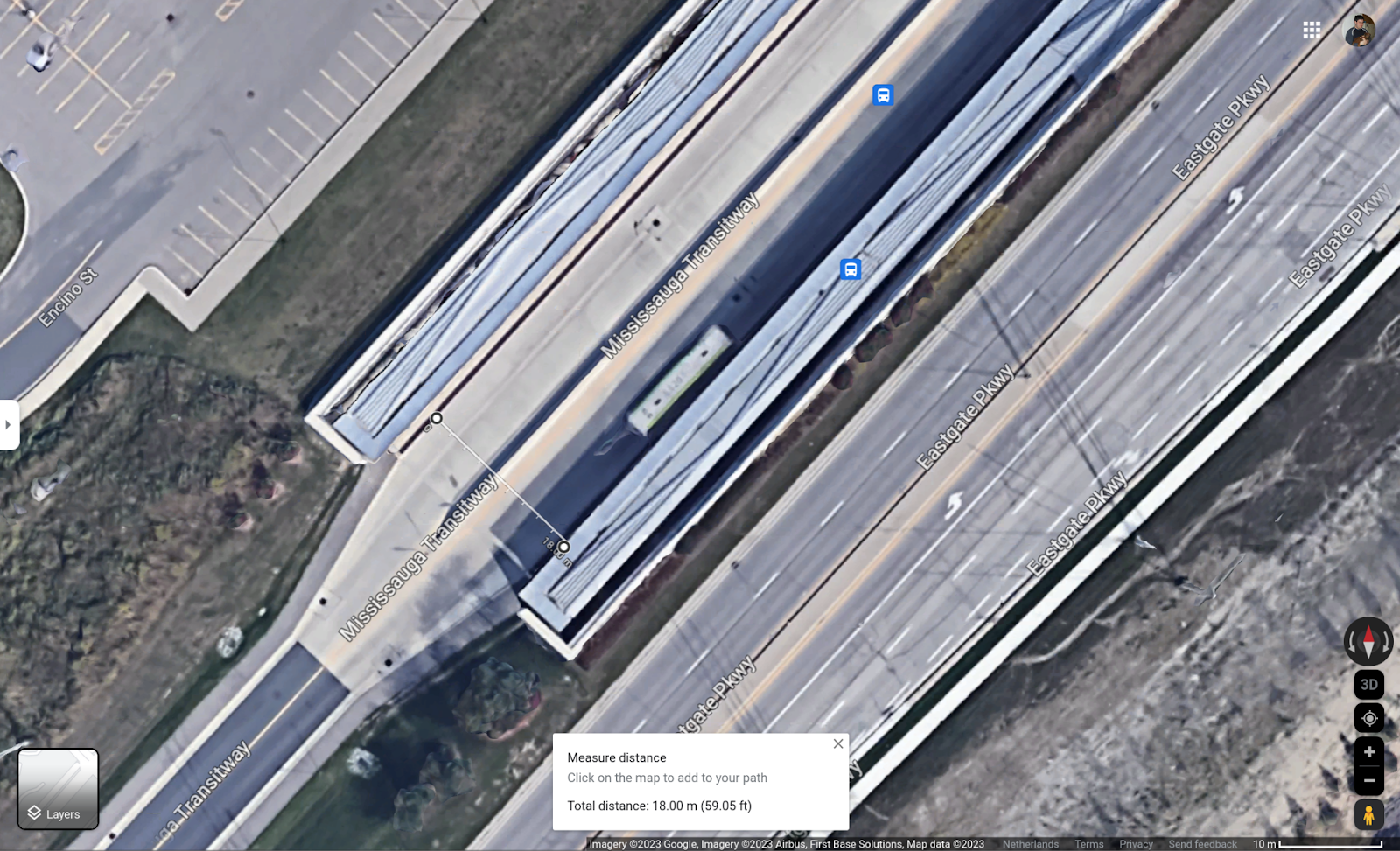
In Mississauga, the city built a transitway, consisting of extensive stations, and a busway separate from but parallel to the nearby roadways. In this case, the speed limit is 80km/h, much higher than the Richmond Hill busway and buses do not risk mixing with vehicles. While the busway itself is only around 7.5 meters wide, it includes gutters and shoulders that brings the full paved width to over 13 meters.
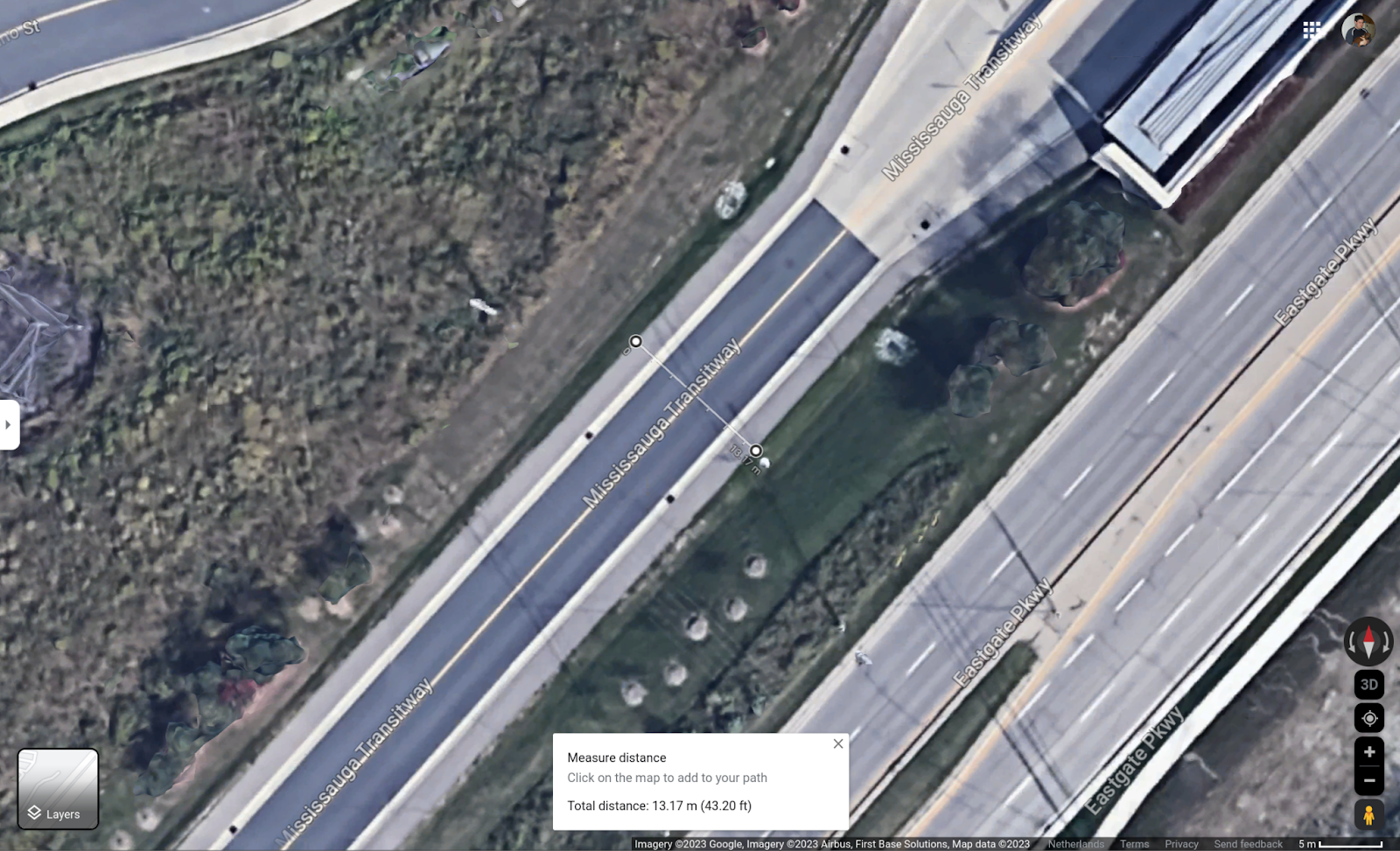
The stations have few local walkable amenities but are instead extensive, expensive park and rides, with limited pedestrian access to the surrounding (un-walkable) area. Despite having a lower speed limit the busway now has a large central concrete barrier, but because of this divider and the wish to allow buses to overtake in stations, the pavement is now widened to a massive 18 meters.
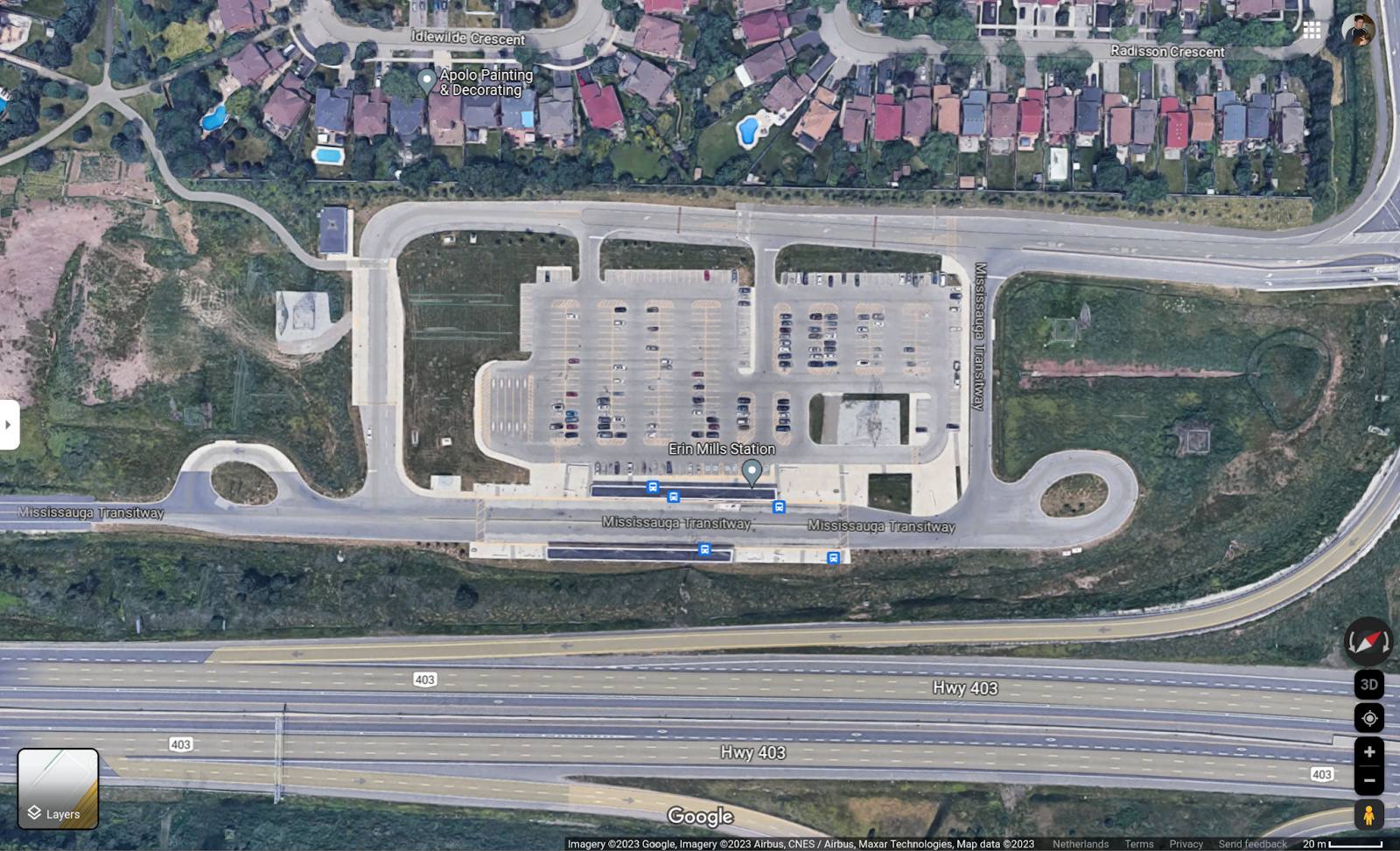
The suburban stations are even more extravagant, including multiple bus turn around loops (along with an unused secondary bus platform for some reason) but ramps onto the parallel freeway are not provided and buses must queue in traffic to navigate onto the freeway to continue across the (more congested) city centre to reach the other section of the transitway.
Finally, the city of Amersfoort has a number of busways, including this one near me. As you can see the pavement is just over 6 meters wide, yet this busway carries buses just as large as the ones in North America. The speed limit is lower (partially owing to the less sprawled nature of the area–travel distances are just shorter) but there is no need for a shoulder. Stations are simple affairs at the side of the busway, very similar to the example from Richmond Hill.
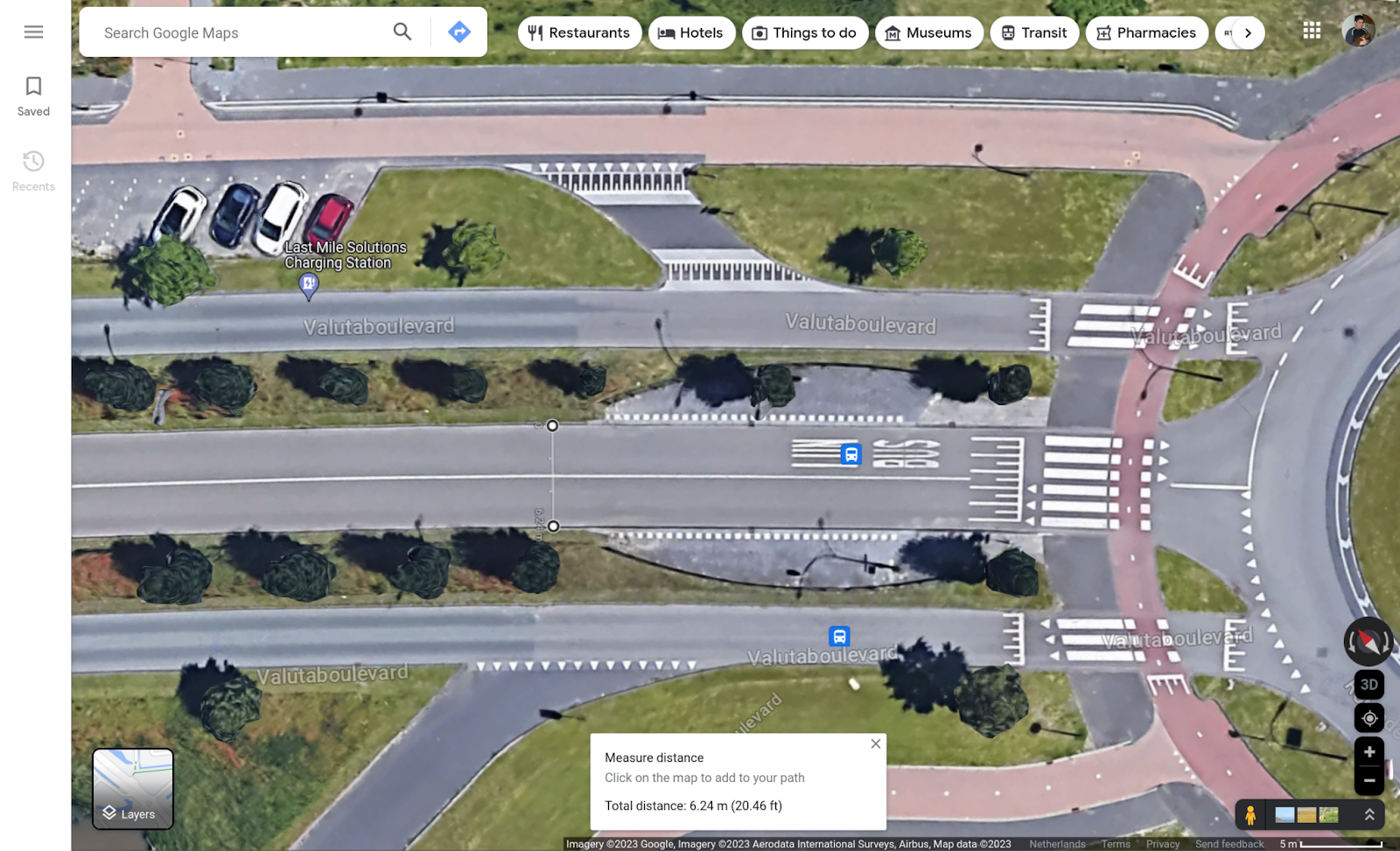
The cost to build the busways in the Netherlands is so much lower than what Mississauga spent on their system. Transit in Amersfoort is not as good as some European cities, but a city of less than 200k people has managed to construct a city wide network of bus lanes that prioritize buses across the entire city. Mississauga, a city of over a million has only managed to afford to build a single bus way, that is not continuous and in fact is missing through the most congested part of the city. Richmond Hill has done better, but the network they built is still limited, busways are missing in the most important areas.
Conclusion
It is certainly the case that the Netherlands is more willing to invest in public transit, but it is also clear that the Netherlands gets much more transit for the dollars they invest. This is a one-two punch to Canada. We won’t invest enough, but even the dollars we do invest, do not go as far as they should.
We must stop gold plating our transit systems. Using tax dollars and transit rider convenience to subsidize political will is not a sustainable model. We need politicians who are willing to spend the political capital to build better systems, even if it means ruffling some feathers. We also need politicians with the expertise and knowledge to push back on excessive engineering standards. A controlled access busway that carries vehicles driven only by professional drivers does not need to be built to a higher standard than the roadways those buses operate on in mixed traffic.
Only then, will we be able to build the transit that we need in order to succeed in our climate plans, in our urban development plans, the transit we need to free ourselves from dependence on the automobile.